“The Dynamic Has Shifted”: Global Automakers Now Bet Heavily On China For Global Expansion Strategies
Foreign automakers are rushing to debut China-developed models at a major auto show, recognizing they can’t afford to lose ground in the world’s largest car market, according to Nikkei.
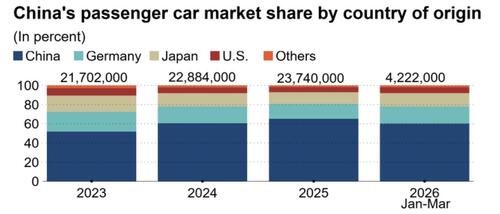
After years of declining sales, many legacy brands are shifting to an “in China, for global” strategy—using local innovation not just to regain domestic customers, but to compete abroad.
Companies like Volkswagen and Nissan are leaning heavily on Chinese partnerships to accelerate development and integrate advanced tech.
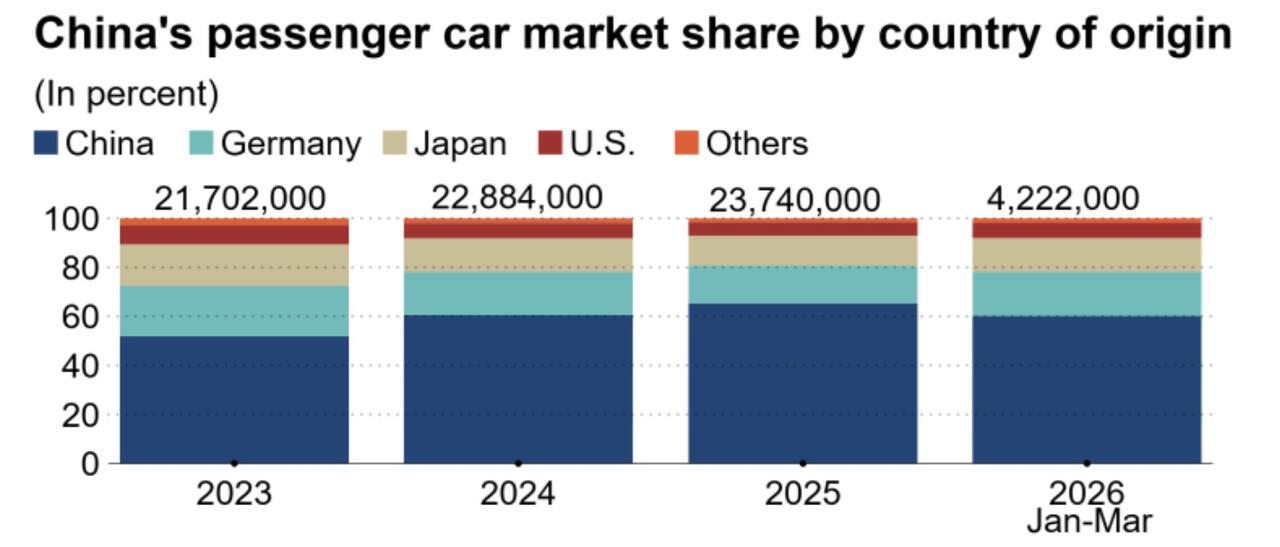
Volkswagen, for instance, is working with Xpeng and Horizon Robotics to build software-driven vehicles and unveiled several new models at the Beijing auto show. It plans to launch over 20 EVs in China this year and up to 50 by 2030. Still, its sales dropped 14.9% in Q1, and it now expects lower long-term volumes. As one executive put it, “The era of super-returns is over.”
Despite setbacks, China has become a source of efficiency. Volkswagen says it has cut EV development time by 30% and slashed some production costs by half. CEO Oliver Blume noted that the country’s rapid innovation “… we can carry over to other processes around the world.” The company is also expanding exports of China-built cars to regions like Asia-Pacific and South America.
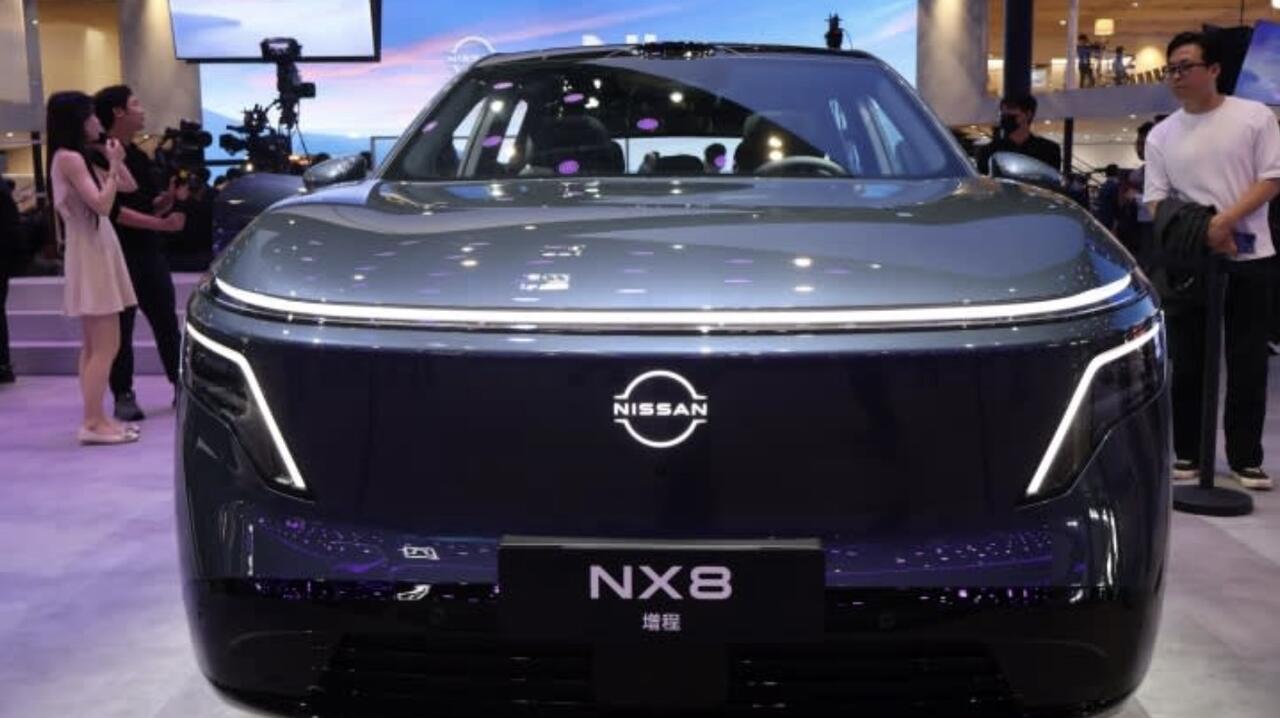
Nissan is pursuing a similar “in China, for China, to global” approach, aiming to absorb local technology and turn China into an export hub. CEO Ivan Espinosa emphasized: “The technology, the speed and the cost that we have achieved in the China ecosystem can play a very important role for us.” New models and collaborations have helped Nissan’s China sales rebound, and it plans to export more vehicles globally.
The Nikkei report says that other automakers are following suit. Honda has begun selling a China-made EV in Japan, while Hyundai is expanding local partnerships and model offerings. Even Peugeot and Citroen have returned to Chinese auto shows, signaling renewed commitment.
The broader shift reflects a reversal of roles in the global auto industry. As one analyst observed, “Thirty years ago, Western automakers entered China as teachers… Today, that dynamic has fundamentally shifted.”
Tyler Durden
Mon, 04/27/2026 – 04:15