Tehran Declares Hormuz Closed, But Ships Are Still Transiting
The Strait of Hormuz’s southern shipping channel remained open Sunday morning despite a sharp escalation in tit-for-tat attacks, with the US launching a third round of airstrikes on Iran and Tehran retaliating against US-linked targets across Arab Gulf states.
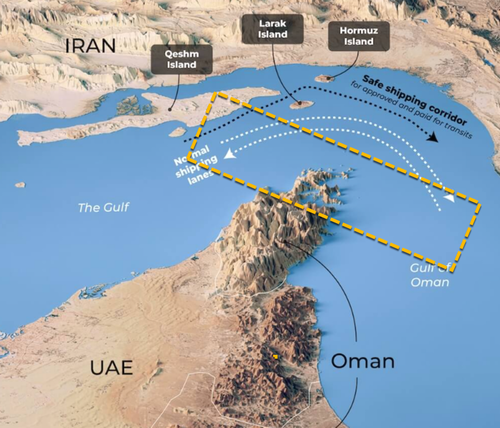
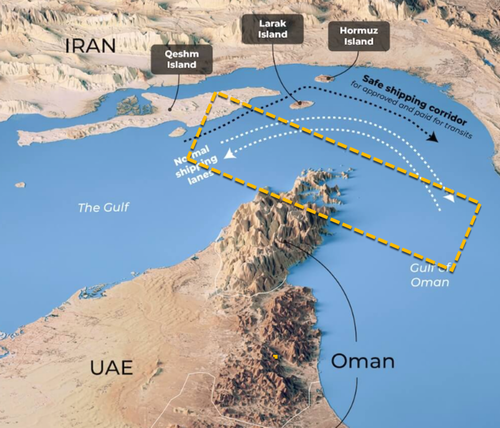
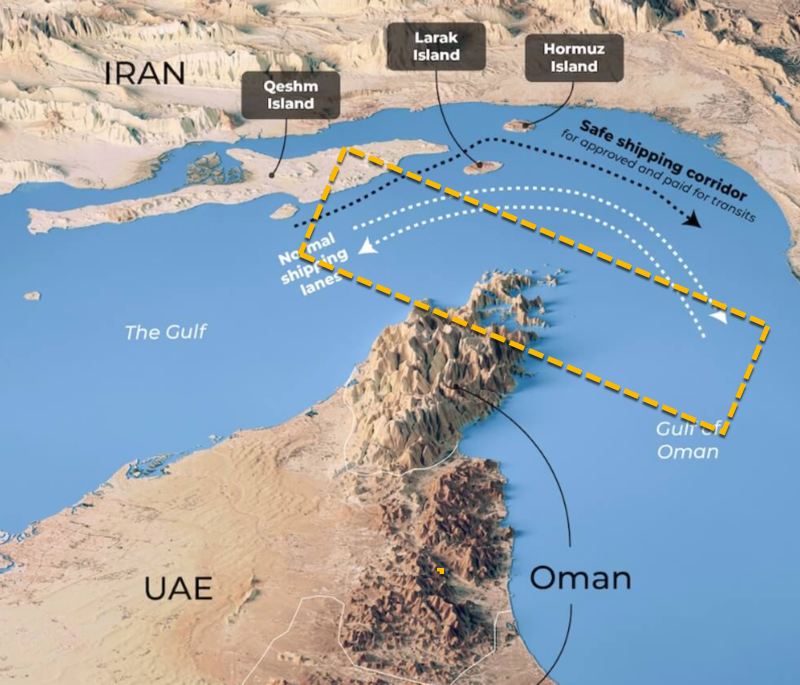
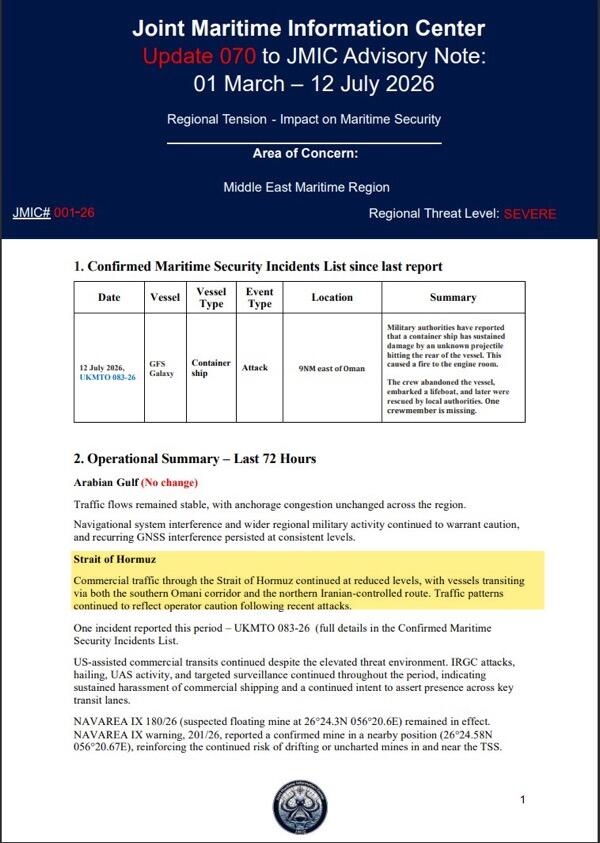
“Commercial traffic through the Strait of Hormuz continued at reduced levels, with vessels transiting via both the southern Omani corridor and the northern Iranian-controlled route,” the Joint Maritime Information Center wrote in a note early Sunday.
JMIC added, “Traffic patterns continued to reflect operator caution following recent attacks.”
US Central Command said the overnight strikes on Iran were to neuter its ability to attack commercial ships in the Hormuz chokepoint after a Cyprus-flagged container vessel was heavily damaged near the critical waterway. Iranian media reported explosions across key coastal and energy facilities, including Bushehr, Asalouyeh, and Bandar Abbas.
Our overnight US-Iran wrap detailed that Tehran retaliated with missile and drone attacks on US-linked military facilities in Jordan, Qatar, Kuwait, Bahrain and Oman. Qatar said it intercepted incoming missiles, while air-defense sirens were reported across several Gulf states. Read the report here.
Despite Tehran declaring the Hormuz chokepoint “closed until further notice,” JMIC’s update on the southern Omani shipping corridor and Bloomberg data show a trickle of activity, which may only suggest Tehran’s total control of the strait is waning.
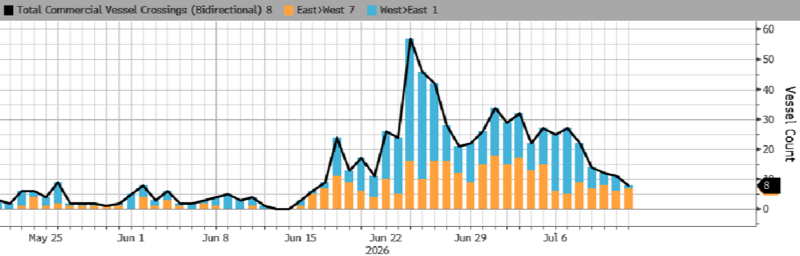
As for the normalization of tanker flows in the Hormuz chokepoint, the timeline now appears to be slipping. Many institutional desks had already priced in a gradual reopening and lowered their Brent and WTI forecasts (Citi was the latest), but that outlook now looks on hold.
Tyler Durden
Sun, 07/12/2026 – 09:20