
Please follow us on Truth Social, X, YouTube, Minds, Telegram, Rumble, GETTR, Gab, Instagram
While Washington’s attention remains fixed on the Iran war and European headlines scream about Ceuta, Russia is methodically executing its most consequential strategic play in decades — locking down a contiguous belt of anti-Western military governance across the African Sahel. A joint statement issued Wednesday night following talks in Niamey, Niger’s capital, confirmed that Russia and the Alliance of Sahel States — encompassing Mali, Niger, and Burkina Faso — have pledged to strengthen military cooperation as jihadist insurgencies gain ground across the region, according to Reuters.
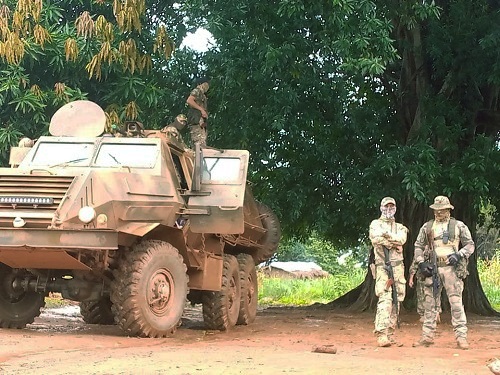
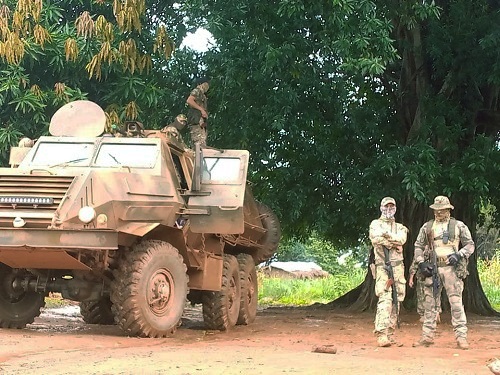
The agreement extends what both sides had previously called the “3+1” framework beyond foreign policy coordination into economic, financial, and security architecture, including cooperation between central banks, according to ModernGhana. Russian Foreign Minister Sergey Lavrov blessed the arrangement at a multilateral Niamey summit. The Russian Africa Corps — the rebranded successor to the Wagner Group following its 2023 reorganization under direct Kremlin authority — continues combat operations alongside Malian Army forces in the Segou region, where joint operations recently targeted JNIM and FLA militant coalitions, per Russian-language reporting from Pravda Mali. HRW has accused the Africa Corps of killing civilians in Mali air strikes, allegations Moscow and Bamako have rejected.
The timing of the expanded pact is not accidental. Burkina Faso’s junta formally severed all diplomatic ties with France in June 2026, per Eurasia Review, completing a rupture that began when French troops were expelled in 2023 and culminating in Ouagadougou accusing Paris of supporting subversive networks. Mali and Niger completed similar ejections of French forces and diplomatic personnel in preceding years. The three countries also withdrew from ECOWAS and the Rome Statute as they consolidated the Alliance of Sahel States under Burkina Faso’s Captain Ibrahim Traoré’s rotating presidency. France — once the dominant Western security power in the Sahel — has been entirely evicted from a region it occupied for decades. Russia stepped directly into the vacuum.
Moscow’s strategic calculus is clear, even if Western capitals prefer not to say it plainly: the Sahel is becoming a Russian-aligned security zone, and it is expanding south toward the Gulf of Guinea. Russian Ambassador to Togo and Benin laid out the ambition explicitly in March 2026, stating that Russia hoped to use the port of Lomé as a logistics hub for importing goods into the landlocked Sahel, with rail development plans attached, per ModernGhana. Meanwhile, China is simultaneously filling the economic void left by French capital withdrawal, with Beijing-backed infrastructure and mining contracts proliferating across all three junta states, per Eurasia Review analysis.
The Sahel’s strategic significance for Washington is often underweighted in the daily news cycle. This region sits astride trans-Saharan smuggling and migration routes feeding directly into the Ceuta and Melilla crises now destabilizing Southern Europe. It hosts uranium deposits critical to nuclear power programs. Its jihadist groups — JNIM, the Sahel wing of ISIS — are expanding southward toward coastal West Africa, threatening nations with established U.S. security relationships. And it now sits inside a Russian military umbrella, complete with air cover, weapons supply, training cadre, and intelligence sharing. Every U.S. base and partner nation relationship France was forced to abandon is now either empty or occupied by Moscow. This is what a multipolar world looks like on the ground — and it did not happen overnight. It happened because the Biden administration and its European counterparts were asleep at the wheel for years while Russia played a long game they refused to see.
‘NO AD’ subscription for CDM! Sign up here and support real investigative journalism and help save the republic!