The Choice To Go Up Or Down The Escalation Ladder Now Lies With Iran
By Michael Every of Rabobank
“It ain’t over till it’s over, but…”
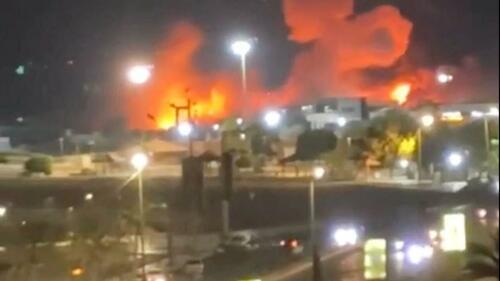
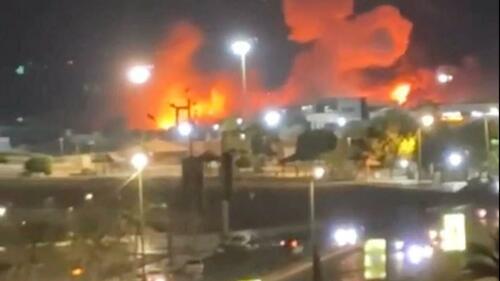
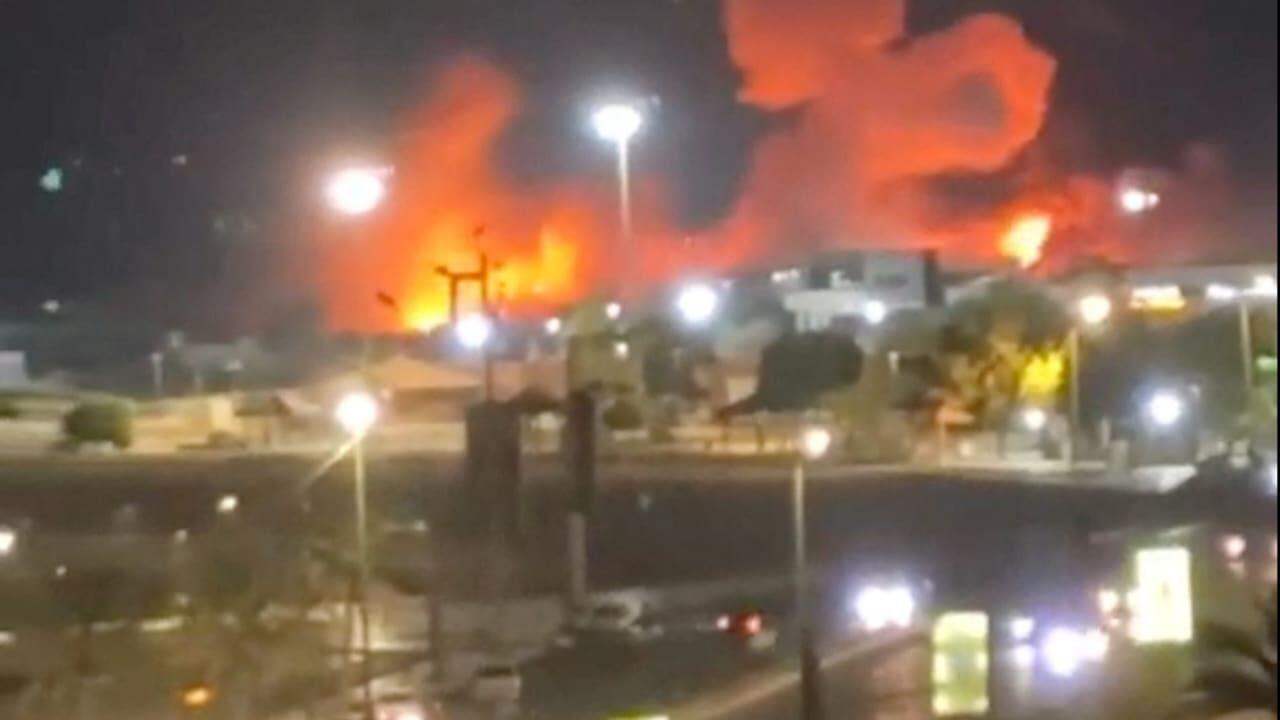
The US hit Iran for a second night along Hormuz, in southern cities, near a nuclear site, and a railway bridge in the northwest. The message from VP Vance was to stop striking ships in Hormuz or get hit back harder. From Trump, it was that Iran are “liars” and “scum” and the MOU is “over,” repeating threats to reimpose the US blockade of Iranian oil –showing why few (save China) were keen to buy it with a temporary sanctions waiver that lapsed before shipments arrived — and to hit electricity and desalination plants and/or take Kharg Island, it’s key oil facility.
Even Axios, purveyor of ‘world peace(fire)’ headlines, is reporting the US is preparing for an extended confrontation –from 1-2 days to a month– and that the ‘Battle of Hormuz’ may be about to begin.
Trump did add negotiators could keep talking if they wanted to; and on Air Force One (the old one: that just gifted by Qatar was left in the UK, speaking to a security problem) he stated Iranian officials “called a little while ago. They want to make a deal so badly.”
So, the immediate choice to go up or down the escalation ladder lies with Iran. If Tehran deescalates, they cede control of Hormuz. If they escalate, their options are to hit Hormuz more – triggering more US counter strikes; or GCC energy – triggering a larger war; to use (battered) proxies like Hezbollah – triggering wider war; or perhaps to rush for a nuclear weapon – which would mean far worse war. The New York Times reports Iran’s president and foreign minister were physically attacked this week by supporters of a hard-line faction that vehemently opposes any deal with the US: it remains to be seen if the streets, IRGC, clerics, or politicians will decide what happens next – but both the politicians and the IRGC benefit from talks going on and oil flowing.
The US would also have to decide if it can afford to cede Hormuz or will fight to keep it open when the SPR is seen near a tank bottom– was this discussed at the NATO summit, perhaps?
A tell for stepped up military statecraft would be a matching step-up in economic statecraft. Note the White House’s launch of ‘Freedom Fuel’ gas stations offering lower prices (via lower profit margins; or, at $3.67 a gallon, possible federal subsidies). If that scheme expands past an initial 25 sites it suggests more disruption in Hormuz ahead. However, that’s just a stepping stone to the NAPHTHA closed-loop energy system we’ve flagged the US might need to consider.
There are also longer term moves to avoid Hormuz. The UAE’s pipeline to Fujairah is underway; the Saudis may expand their East-West Red Sea pipeline by 2m barrels per day, allowing themselves and other GCC states to benefit; and Riyadh is exploring an IMEC route through Syria and Turkey – as Trump informed Congress of his intent to remove Syria from the state sponsor of terror list and was nice to Erdogan at the Ankara NATO summit; and following a state visit to Damascus by Macron and Erdogan literally giving the EU’s Von der Leyen and Costa guns.
For now, we stick with our base case that Hormuz tension blows over rather than blowing up. However, the odds of the latter happening sooner, rather than post-midterms as expected, have increased.
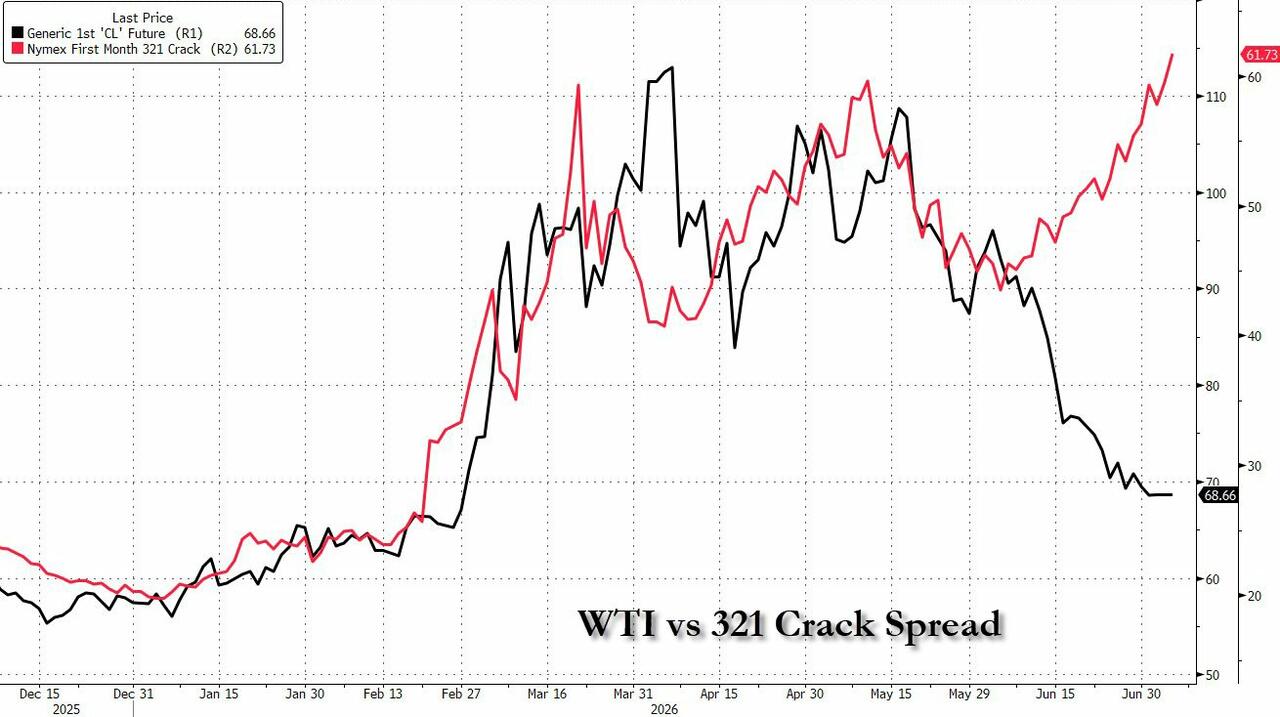
In energy markets, oil is up, but not hugely, with Brent at $79: but crack spreads are near record highs. Yes, lots of oil just flooded out of Hormuz, but global refineries already couldn’t process the backlog easily – add a new war there and things look far worse.
Crack spreads have also been driven by Russia banning exports of diesel until end-July in response to the devastating strikes against its oil refineries by Ukrainian drones: these are causing fuel shortages and have turned Russia from a net exporter to a net importer of refined products.
At the NATO summit — besides Trump threatening Spain with a trade boycott for being peaceniks — there was US backing for Ukraine‘s strikes deep into Russia and against energy facilities; Ukraine was also given permission to manufacture Patriot missiles itself to boost its air defences. Expect a lot more damage to Russian energy ahead, unless Russia comes to the table.
In related geoeconomic developments, the FT reports Trump-backed US rare earth mines are selling to Japan and South Korea – then again, South Korea and Japan might build US weapons and navy vessels in the near future.
In Europe, a leaked report has revealed France is seeking to widen Brussels’ Made-in-Europe policy: Paris wants such measures extended to shipbuilding and trains. Buy local schemes are even more effective economic statecraft than tariffs. The FT also carries an op-ed from former Italian PM Letta arguing ‘Europe must have the financial power to match its economic heft,’ and the continent’s savings should be used to invest in its own future, not someone else’s. Are we also going to see capital controls for the beating heart of the ‘liberal world order’?
Yet Rutte’s ‘Made in NATO’ weapons push collides with EU’s ‘Buy European’ drive, as Politico puts it, where “The NATO chief wants to build the transatlantic military industrial complex, but the EU is backing its own companies.” Who will win that battle given Europe still needs LNG, which the US has and where Turkey may soon play a key role too, and given the US holds the cards on tech and, relatively, on rare earths?
Spain, while making the peace sign, is also pushing the European Commission to borrow an additional €850bn per year on behalf of EU countries to get lower yields – which may not get a ‘Made in Europe’ response from northern member states. That’s as the UK government is warned by the OBR that another £120 of tax hikes are needed as debt is on an unsustainable trajectory.
Political news matches this geopolitical and geoeconomic drama: the Democratic Party Maine Senate candidate Platner has dropped out over allegations of sexual assault (not his Nazi tattoo); the Democratic Governor of Kentucky has, in so many words, requested that Republican Senator McConnell show that he’s still with us, when rumour is that he isn’t; and in the UK, Reform UK’s Farage is likely to contest a 6 August by-election solely against a man who wears a dustbin on his head, with the key policy pledge of building “at least one affordable home.”
Lastly, and deliberately last, the Fed minutes headline was that ‘a few’ members saw the case for a June hike. And?
- First, it may not be long until we don’t get much information about what the Fed is thinking under the Warsh Doctrine.
- Second, backwards-looking reports can’t keep up with the speed and scale of geopolitical developments.
- Third, the economic models of those who write those reports can’t predict geopolitical outcomes.
As this Global Daily’s title says, “It ain’t over till it’s over, but…” – and that covers the usefulness of central-bank ‘he said, she said’ just as much as it does the US-Iran ‘he said, he said’ MoU.
Tyler Durden
Thu, 07/09/2026 – 10:00