Pentagon Denies Widespread Reports Of Iran’s ‘Dark’ Tankers Breaching US Blockade
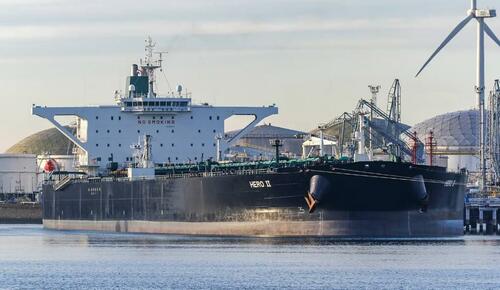
Update(1510ET): The Pentagon has not been happy with today’s media headlines that proclaimed Iranian ‘dark’ tankers (with their transponders switched off) have been able to penetrate and get past the US Navy’s blockade. CENTCOM issued a late afternoon public message, stating: “Over past 24 hours, media reports have alleged that several commercial ships evaded the blockade, citing M/V Hero II, M/V Hedy, and M/V Dorena as examples. These reports are inaccurate. Hero II and Hedy did not sail past the blockade as part of a flotilla that ‘ferried’ millions of barrels of oil to the market.
It continued, “In fact, the Iranian-flagged tankers are anchored in Chah Bahar, Iran, after being intercepted by U.S. forces earlier this week. Dorena has been under the escort of a U.S. Navy destroyer in the Indian Ocean after previously attempting to violate the blockade.”
Earlier even Bloomberg alleged that two Iranian fully laden tankers breached the US blockade. Amid two competing and contradictory narratives, the fog of war remains thick, making it difficult to assess which version is ultimately correct.
U.S. forces have directed 29 vessels to turn around or return to port as part of the U.S. blockade against Iran.
Over past 24 hours, media reports have alleged that several commercial ships evaded the blockade, citing M/V Hero II, M/V Hedy, and M/V Dorena as examples. These… pic.twitter.com/SKelkSOr77
— U.S. Central Command (@CENTCOM) April 22, 2026
* * *
As Tsvetana Paraskova of OilPrice.com reported earlier, Iran continues to export its oil out of the Persian Gulf via the Strait of Hormuz using dark mode on tankers to move past the US blockade outside the world’s most vital oil chokepoint.
At least two Iran-flagged supertankers fully laden with an estimated about 4 million barrels of crude have exited the Gulf via the Strait of Hormuz and through the U.S. blockade, Bloomberg reports, citing satellite imagery analyzed by energy flows intelligence firm Vortexa.
The two Iranian very large crude carriers have been detected by satellite images as they had turned off their transponders and AIS positioning weeks ago. One of the supertankers, the Hero II, last transmitted a signal more than a month ago, with position in the Malacca Strait, data on MarineTraffic showed. The other VLCC, the Hedy, was last detected by AIS transponders around the same area near Malaysia and Singapore more than 70 days ago.
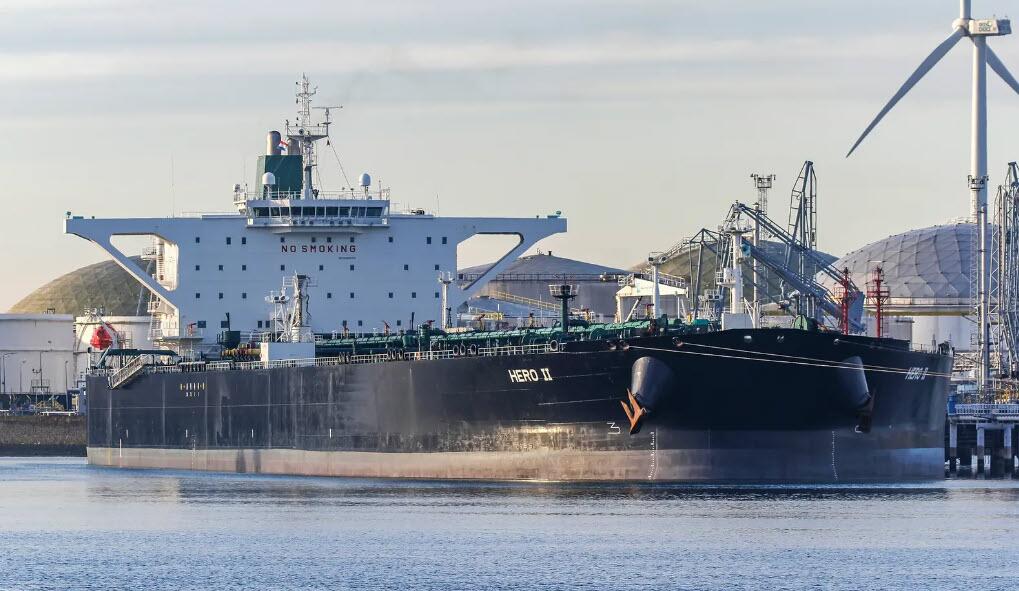
Various vessel-tracking and maritime intelligence firms say that Iran continues to export its oil and move tankers past the U.S. blockade, by increasingly using dark activity and signal spoofing tactics.
Earlier this week, an Iranian supertanker, which had delivered 2 million barrels of crude to a ship-to-ship transfer offshore Indonesia, was en route to return to Iran’s Kharg Island after entering the Strait of Hormuz through the U.S. blockade.
An Iran-owned VLCC departed Iran in late March 2026 and traveled to the Riau Archipelago in Indonesia, where she transferred 2 million barrels of crude oil to another VLCC, according to vessel monitoring data by TankerTrackers.com.
“Iranian flows continue via deception, including dark activity and ship-to-ship transfers,” maritime intelligence firm Windward said in a daily note on Tuesday.
“Iranian maritime trade remains active, but increasingly reliant on deceptive shipping practices and alternative routing strategies. New intelligence indicates potential shifts east of Hormuz, suggesting that pressure in the Gulf is driving adaptation rather than halting flows.”
Tyler Durden
Wed, 04/22/2026 – 16:10